The Human Side of Technology
AI Recruiting Gone Wrong - Debugging Recruiters
Or: How I Learned to Debug Recruiters
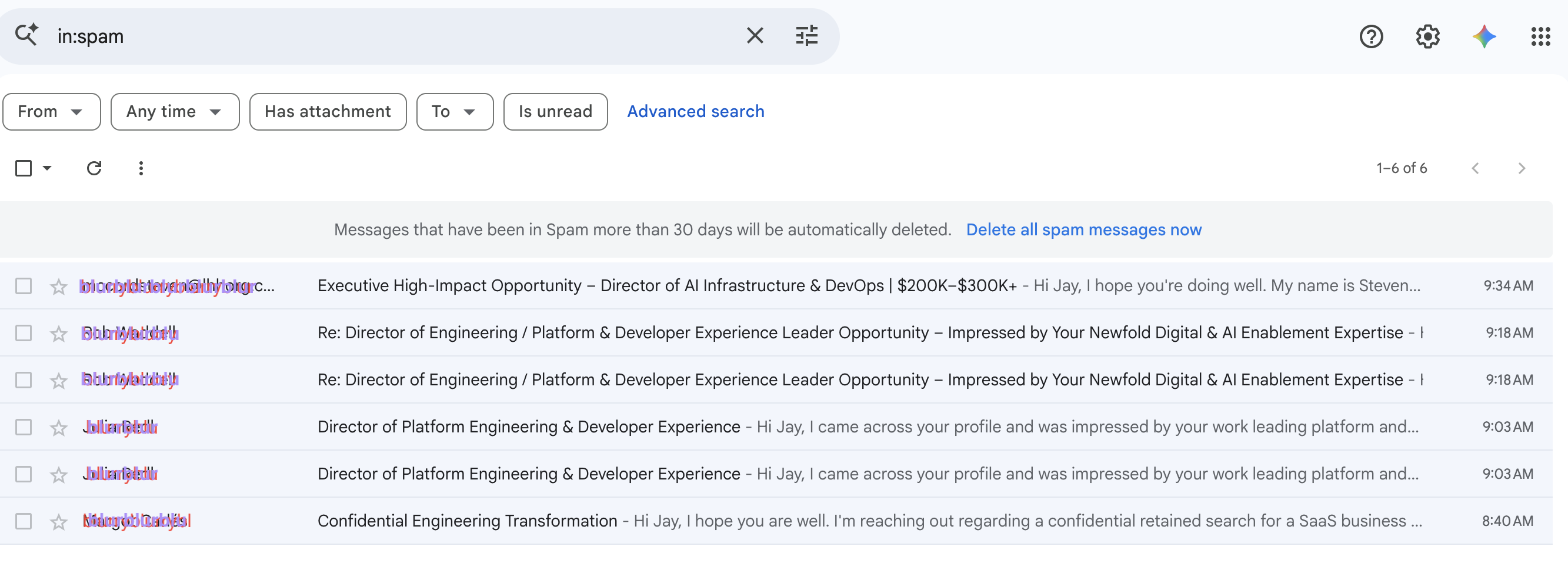
This was my spam folder before lunch today.
At first glance, it looked like a pretty good day.
Director of Engineering.
Platform Engineering.
Confidential retained search.
Executive opportunity.
Fortune 500 companies.
The kind of emails anyone in the middle of a job search hopes to receive.
Except...
They weren't real.
By lunchtime, I had:
- Reported three fraudulent LinkedIn accounts.
- Identified multiple AI-generated recruiting messages built from my own LinkedIn profile and website.
- Verified that one "recruiter's" profile photo belonged to someone else.
- Received invitations to discuss jobs that don't appear to exist.
- Been asked to continue conversations using Gmail accounts with misspelled domains.
The scams have changed.
The old scams were easy to spot.
"Kindly send your resume."
Poor grammar.
Too-good-to-be-true promises.
Today's scams are different.
They know what you do.
They know where you've worked.
They know the technologies you've used.
They know what you've been posting about.
They use AI to build a job description that sounds like it was written specifically for you.
And that's exactly the point.
They're no longer trying to fool everyone.
They're trying to fool you.
As engineers, we spend our careers debugging systems.
So I started debugging recruiters.
My checklist is simple:
- Does the recruiter have a corporate email address?
- Can they identify the recruiting firm they represent?
- Does the company actually have the role they're describing?
- Can they provide a requisition number or a legitimate explanation if the role isn't public?
- Does the profile have real activity, real coworkers, and real history?
Most importantly...
When I ask reasonable verification questions, do I get answers...or do I get redirected?
That last one has become my favorite.
Legitimate recruiters answer questions.
Scammers change the subject.
If you're searching for your next opportunity, remember this:
People looking for work are already carrying enough.
Please stop treating hope as a transaction.
And to the many legitimate recruiters who work hard, build trust, and genuinely help people find meaningful careers...
Thank you.
You build relationships, advocate for candidates, and help people find careers they'll love. This article isn't about you.
It's about the people using your profession as camouflage.