The Human Side of Technology
The Elephant in the Room Has a Few Things to Say
On ageism, experience, purpose, and the remarkable things people assume when they discover you're 67.
What I wouldn't give to have one more conversation with my dad or my grandfather.
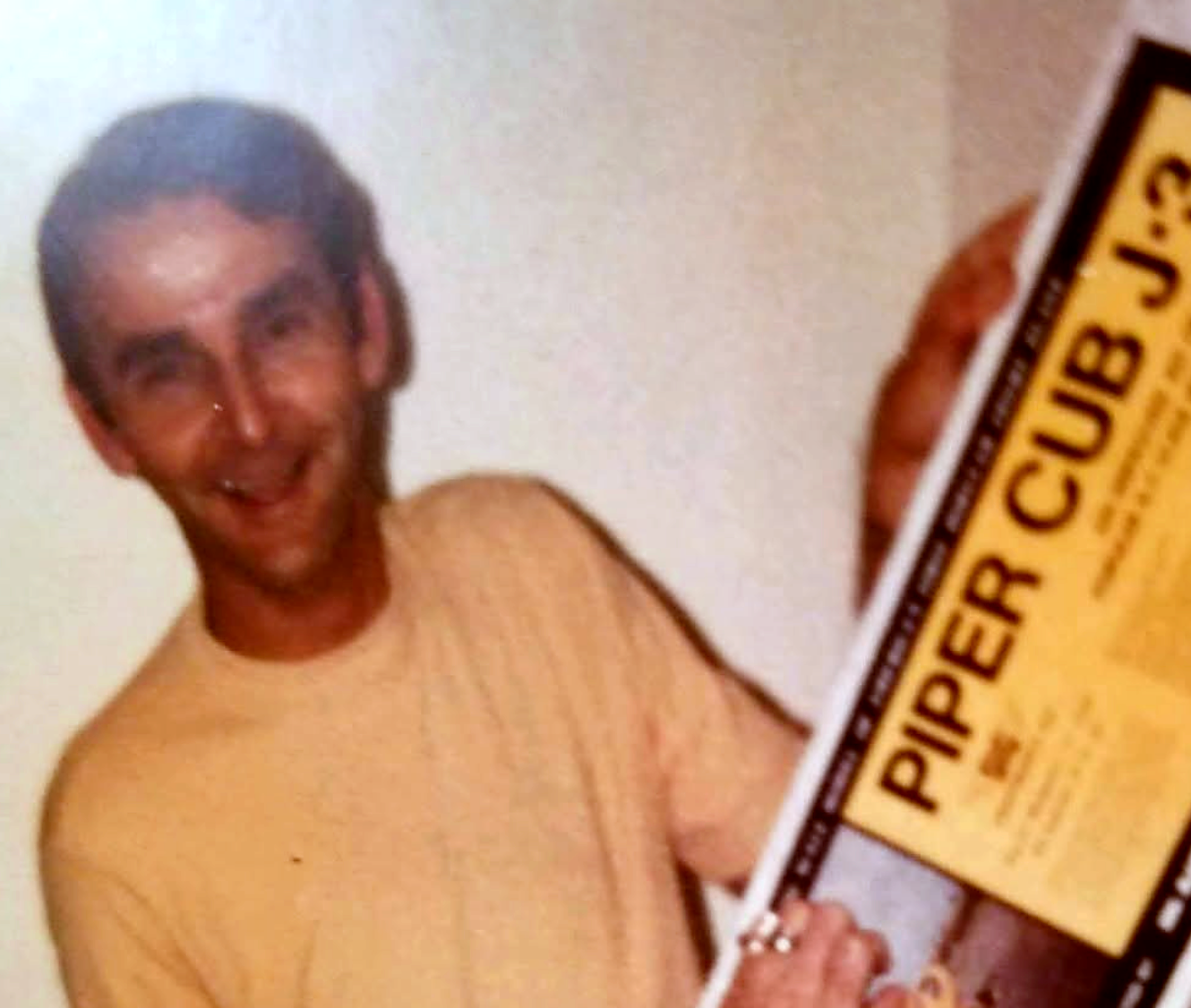

One more opportunity to ask a question, listen to a story, or benefit from the wisdom they accumulated over their lifetimes.
They've both been gone for a while.
But I can still hear them.
Sometimes it's something they said. Sometimes it's how they approached a problem. Sometimes it was working alongside them with barely a word spoken. Sometimes I find myself doing something a particular way and realize, with a smile, exactly where I learned it.
Funny how that works.
The older I get, the more I appreciate the value of what they passed along. Not just knowledge, but perspective. Judgment. The ability to recognize when something matters and, perhaps more importantly, when it doesn't.
I've been thinking about that quite a bit lately.
Particularly since someone suggested that, at my age, perhaps I should consider becoming a security guard.
Or moving to Thailand.
Or taking a computer programming class.
That last one deserves its own paragraph.
Six and Out
A while back, I went through six rounds of interviews for an engineering leadership position.
Six.
I met with engineers, managers, and executives. We discussed architecture, platforms, engineering practices, leadership, and the kinds of organizational challenges I've spent decades helping solve.
Then came the rejection.
An automated email.
No phone call. No personal note. Just the electronic equivalent of someone clicking a button labeled "Nope."
I mentioned this experience in an online community I've belonged to since the 90s. These are people who've known me, at least virtually, for decades. We've debated everything imaginable, occasionally agreed on something, and generally managed to remain friends afterward.
My contribution to the discussion included a simple question:
"Anyone need an experienced grocery bagger?"
Apparently, that was an invitation for career counseling.
One member began his response with "None of my business..."
Which, in retrospect, should have been a warning to everyone involved.
He then pointed out my age, cited a life expectancy statistic, and suggested that perhaps I should retire, collect Social Security, become a security guard, try real estate, substitute teach, or sell everything and move to another country.
He also observed that thousands of younger people with student loans were looking for work and willing to work themselves into the ground.
And then came the computer programming class. My personal favorite.
I have been writing software for decades.
I suppose it's never too late to learn.
Apparently, I Have an Expiration Date
First, I'm 67 (and a half).
I am not dead, dying, technologically obsolete, financially destitute, or looking for someone to tell me what an "old person's job" should be.
I've built software, led engineers, designed development platforms, sat at the PHP table, migrated systems to the cloud, worked with containers since Docker was young, implemented CI/CD systems, written two books, hired people, mentored people, and helped organizations adopt technologies that didn't exist when I began my career.
I'm still learning new ones.
That is rather the point.
There's a peculiar irony in the assumption that older engineers can't keep up with modern technology.
Some of the technologies we now consider indispensable were developed, refined, and brought into widespread use by people who are now old enough to experience age discrimination themselves.
And many of those people are still working on what comes next.
Technology didn't arrive fully formed one morning, delivered by a collection of 25-year-olds wearing hoodies and flip-flops. Not that there is anything wrong with 25-year-olds wearing hoodies and flip-flops.
It evolved.
People built it. Other people improved it. Generations of engineers learned from one another, challenged one another, and occasionally threw out perfectly good ideas in favor of better ones.
That's how engineering works.
Today, I'm actively exploring AI and how it changes the way we build, deliver, and maintain software. I'm particularly interested in helping organizations adopt it responsibly, with intent, rather than simply throwing a chatbot at every problem and declaring themselves AI-first.
I've seen enough technological revolutions to know that enthusiasm is not an implementation strategy.
I've also seen enough to know that dismissing a new technology because it's unfamiliar is a fine way to become irrelevant.
Neither mistake is exclusive to any particular age group.
The question isn't how old someone was when a technology emerged.
It's whether they're willing and able to learn, adapt, contribute, and help others do the same.
Since You Brought Statistics to the Party
My unsolicited career counselor informed me that the average American male could expect to live until approximately 76.5.
He seemed to believe this meant I had roughly nine years left.
There's a small statistical problem with that reasoning.
The CDC figure he was referencing concerns life expectancy at birth. It doesn't mean that a man who has already reached 67 should expect to die at 76.5.
The CDC's 2024 figures show that a man who has reached 65 has an average of another 18.4 years of life expectancy.
So he managed to age me out of the workforce and kill me prematurely in the same paragraph.
Efficient.
He also referenced a Transamerica Institute study suggesting employers have internal age cutoffs for hiring.
Now, this is where the conversation becomes considerably less amusing.
The 2024 Transamerica Institute employer survey includes a section examining when employers consider someone "too old" to work or hire.
Fifty-six percent said it depends on the person. Another 9% weren't sure.
Among employers who supplied a numerical age, the median age considered "too old to hire" was 58.
Fifty-eight.
That's not evidence that older workers should stop applying for jobs.
It's evidence of the problem.
Research involving more than 40,000 fictitious job applications has found significantly lower callback rates for older applicants overall. Other research has examined how ageist language in job advertisements influences hiring outcomes and discourages applications.
And the Age Discrimination in Employment Act prohibits discrimination against applicants and employees aged 40 and older.
Yet here we are.
The law can prohibit discrimination.
It cannot magically remove the assumptions people carry into a hiring decision.
The Bias Nobody Mentions
This is the part that troubles me most.
Ageism doesn't always announce itself.
Sometimes it arrives disguised as concern.
"Are you sure you want to keep working?"
"Wouldn't you rather enjoy retirement?"
"Will you be comfortable with the newer technologies?"
"Are you going to be happy reporting to someone younger?"
"Do you think you'll fit our culture?"
Those questions aren't automatically discriminatory. Context matters, and reasonable questions about someone's actual interests, abilities, and expectations are part of hiring.
But when someone answers those questions for a candidate based solely on age, something has gone wrong.
The candidate may never know.
Nobody sends a rejection email saying, "We decided you're probably too old to understand our technology stack."
They just send the usual message about pursuing other candidates whose qualifications more closely align with their needs. And sometimes I wonder whether "overqualified" is simply a more socially acceptable way of saying something nobody wants to put in writing.
Sometimes that's exactly what happened.
Sometimes it isn't.
I can't tell you how many times age has influenced a hiring decision involving me. I don't sit in those rooms. I don't hear those conversations.
And that's precisely the problem.
The most consequential assumptions may be the ones nobody ever expresses.
A hiring manager may sincerely believe they're evaluating candidates objectively while quietly making judgments about adaptability, energy, ambition, technical relevance, or retirement plans.
All without asking the person sitting across from them.
You cannot challenge an assumption you never knew someone made about you.
And the cost isn't borne solely by the candidate who gets passed over.
The organization may lose someone who could have solved a difficult problem, improved an engineering practice, mentored a promising employee, or helped an entire team become more effective.
That's a loss, too.
Even if nobody notices it.
I Still Have Work to Do
I started working, formally, when I was 14, cleaning the kennels and fish tanks at a local pet shop.
This is the first extended period of my adult life when I haven't been working.
And I don't particularly care for it.
Not because I don't enjoy time with my family, tinkering in my workshop, writing, cooking, or pursuing any of the dozens of things that occupy my attention.
I do.
But I also love engineering.
I love solving problems. I love building things. I love helping people accomplish something they weren't sure they could accomplish.
And at this point in my career, my contribution isn't measured solely by the software I write, the systems I design, or the technical problems I solve.
It's also measured by what the people around me become capable of doing.
I've spent years mentoring engineers, building teams, removing obstacles, sharing what I've learned, and learning from people who know things I don't.
Especially that last part.
Experience doesn't make someone automatically wise, any more than youth makes someone automatically innovative.
I've encountered older engineers who stopped learning years ago. They do the same things the same way because, "we've always done it that way."
I've also encountered younger engineers whose insight, creativity, and technical ability left me wondering whether I should go home and reconsider my career choices.
Sometimes both happened before lunch.
The best engineering organizations make room for all of that.
They recognize that knowledge moves in both directions.
An experienced engineer may recognize architectural patterns, organizational dysfunction, or the early warning signs of a bad technical decision.
A younger engineer may bring a completely different perspective, challenge an assumption everyone else has accepted, or introduce an approach nobody has considered.
Both have something to contribute.
And when they're willing to learn from one another, remarkable things can happen.
I've always believed that good mentors should work toward making themselves less necessary.
Not by withholding knowledge.
By giving it away.
By helping someone develop the judgment, confidence, and capability to solve problems independently.
Because good engineering leadership isn't about being the smartest person in the room.
It's about helping everyone in the room become better at what they do.
I still want to do that.
I still can do that.
And I see absolutely no reason why my age should diminish either my ability or my desire.
This Isn't a Generational Competition
One particularly troubling part of the original exchange was the suggestion that younger people struggling with student loan debt somehow had a stronger claim to employment than someone my age.
I have two thirty-somethings in my own family, both with advanced degrees, who were laid off this summer.
I know very well that younger workers are struggling, too.
I want them to find good jobs every bit as much as I want one for myself.
Their struggle does not invalidate mine, and mine does not invalidate theirs.
This isn't a zero-sum contest in which a 27-year-old's student loans make a 67-year-old's experience worthless.
Nor does my experience make a younger person's ambitions any less deserving.
Employers should evaluate whether candidates can do the work, contribute to the organization, and grow with the people around them.
That's it.
And for those who believe people my age should simply step aside, consider something else.
People continue working beyond traditional retirement age for many reasons.
Financial security. Purpose. Connection. Family obligations. Personal fulfillment. Community.
Or, here's a radical possibility, because they enjoy their profession and still have something worthwhile to contribute.
Federal Reserve research has found that many people who consider themselves retired continue working, often citing both financial and nonfinancial reasons.
Bureau of Labor Statistics projections likewise anticipate continued participation by millions of Americans beyond age 65.
Working at 67 isn't some eccentric refusal to accept the natural order of things.
It's life.
And it's mine to decide what to do with.
The Wisdom We Leave Behind
Which brings me back to my dad and grandfather.
I would give a great deal to have another conversation with either of them.
Not because they knew everything.
They didn't.
And I suspect they'd be the first to tell you so.
But they knew things I didn't. They had lived through experiences I hadn't. They could recognize patterns and consequences I was too inexperienced to see.
And they were willing to share what they'd learned.
Some of those lessons took years to sink in. Some I'm only now beginning to understand.
Others arrived exactly when I needed them.
I can still hear their voices.
I wonder sometimes whether an engineer I've mentored will remember something I said years from now.
Perhaps they'll be wrestling with a difficult decision, dealing with an impossible deadline, or trying to help someone else through a problem.
And perhaps something I taught them will help.
Not because I was older.
Because I cared enough to teach, and they cared enough to learn.
That's the kind of contribution I want to keep making.
I still have things to learn.
I still have things to build.
And I still have things worth passing along.
About That Elephant
The fellow who inspired this article probably believed he was being helpful.
Perhaps he genuinely was.
But good intentions don't erase the assumptions behind them.
He knew almost nothing about my professional capabilities, financial circumstances, ambitions, health, family obligations, or reasons for wanting to continue working.
He knew one thing.
My age.
And from that one fact, he constructed an entire list of things he thought someone my age ought to do instead of continuing the career I'd spent decades building.
That's what concerns me.
Not the suggestion that I might enjoy retirement.
Not the possibility that some other profession might be rewarding.
And certainly not the idea of learning something new.
What concerns me is that the same assumptions can follow people into workplaces.
Into interviews.
Into promotion discussions.
Into decisions about who gets an opportunity and who doesn't.
Someone may look at an experienced colleague and quietly wonder why they haven't retired, whether they can still learn, whether they should step aside for someone younger, or whether their proper place is now an "older person's job."
And that colleague may never know what was being thought about them.
They'll simply discover that an opportunity has disappeared.
That's not pointing out the elephant in the room.
That is the elephant.
Sources
- CDC — Life Expectancy in the United States, 2024
- Transamerica Institute — Workplace Transformations: Employer Business Practices and Benefit Offerings (2024)
- NBER — Is It Harder for Older Workers to Find Jobs? New and Improved Evidence from a Field Experiment
- NBER — Older Workers Need Not Apply? Ageist Language in Job Ads and Age Discrimination in Hiring
- EEOC — Age Discrimination
- Federal Reserve — Economic Well-Being of U.S. Households in 2025: Employment and Job Quality
- Bureau of Labor Statistics — Civilian Labor Force Participation Rate by Age
- The Retirement Age Debate